






Precision Assays for Drug Discovery

From complex assay design, to cherry-picking and dose-response studies, SPT Labtech’s liquid handling platforms deliver the accuracy and throughput needed for assay development and miniaturization, across 96-, 384-, and 1536-well formats.  

10x

Reagent cost reduction at 1,536-well vs 96-well

25 nL

Minimum transfer volume (mosquito LV)

30s

Volume verification per 384-well plate (BioMicroLab VC384)

Overview

Smarter assay development, from optimization to screening

What is Assay Development?

Successful drug discovery starts with reliable, reproducible assays. But developing the right experimental conditions, optimizing multiple variables and translating assays into high-throughput formats can be time-consuming and resource-intensive.

The variability of assay requirements within the drug discovery space can make development and optimization a daunting task. Firstly assay development is required to optimize conditions that produce a reliable biological or biochemical readout, with a variety of reagent classes and conditions to be tested. This then needs to be translated into smaller volumes or higher density formats without compromising performance. This miniaturized assay must be robust enough to be executed reproducibly, to enable screening of an established assay across multiple compounds and plates.
Modern drug discovery programmes demand assay setup at ever-higher throughput and lower reagent volumes. Transitioning from 96- to 384-well formats delivers greater than 4-fold reagent savings; moving to 1,536-well reduces costs around 10-fold. Automation is the enabling technology - replacing manual pipetting with precise, reproducible liquid transfers that maintain assay quality metrics regardless of plate density or liquid class.

Drug Discovery Lifecycle

A range of assay formats are essential for multiple stages during the drug discovery lifecycle.

1
Target Identification
Biology & Proteomics
2
Target Validation
Assay Development
Assay Setup
3
Hit Discovery
HTS & Screening
Assay Setup
4
Hit-to-Lead
Dose-response & Profiling
Assay Setup
5
Lead Optimization
ADMET & Selectivity
6
Preclinical
In vivo studies
Key Challenges

The Need For Precision With Assay Development

Manual assay setup introduces sources of variability that directly degrade assay quality metrics. Automation addresses these bottlenecks systematically across every plate format and liquid class.
Volume accuracy at low volumes

At 384- and 1,536-well scale, small absolute dispensing errors become significant as a proportion of total well volume. Air displacement pipettes are incompatible with sub-microliter transfers - positive displacement technology is required to maintain accuracy and precision below 2 µL.

Reproducibility across plates and runs

Variability between replicate plates - caused by manual pipetting inconsistency, tip-to-tip differences, or liquid classification errors - inflates Z-factor variance and reduces the statistical power of HTS campaigns. Automated liquid handlers eliminate these sources of inter-plate noise.

Throughput at high plate densities

Manually preparing 1,536-well plates is impractical at screening scale. Non-contact dispensers capable of rapid, tip-free reagent addition across multiple high-density plates are essential for sustainable HTS throughput - without sacrificing accuracy or increasing cross-contamination risk.

Reagent cost and scarcity

Expensive biological reagents, labelled antibodies, and cell-based assay components make volume minimization critical. Moving from 96- to 1,536-well format reduces reagent costs up to 10-fold — but requires liquid handlers capable of precisely and reliably delivering nanoliter volumes to every well.

Compound library management

HTS campaigns require accurate cherry-picking of individual compounds from library plates or tubes, followed by reformatting into assay-ready plates. Manual handling of large compound libraries introduces dead-volume waste, compound concentration errors, and transfer inaccuracies that propagate into screen data.

Dispensing verification

Confirming that reagent has been correctly dispensed into every well of a high-density plate is time-consuming by visual inspection alone. Automated volume verification tools using ultrasound technology provide rapid, well-by-well confirmation without consumables or plate-specific adapters.

Application Deep Dive

Assay Miniaturization and Low Volume Liquid Handling

Why miniaturize assays?

Low volume liquid handling operations

Assay miniaturization is the transition from higher-volume plate formats (such as 96-well) to lower-volume, higher-density formats (384- or 1,536-well). With a shift towards more physiological disease models - 3D cell cultures, patient-derived iPSCs, and CRISPR-based phenotypic screens - reagent costs per experiment have risen substantially. Miniaturization directly offsets this increase.

Transitioning from 96- to 384-well plates typically enables greater than 4-fold reagent savings. Moving to 1,536-well format reduces reagent costs around 10-fold. These efficiencies are critical enablers for increasing screening throughput without proportionate increases in budget.

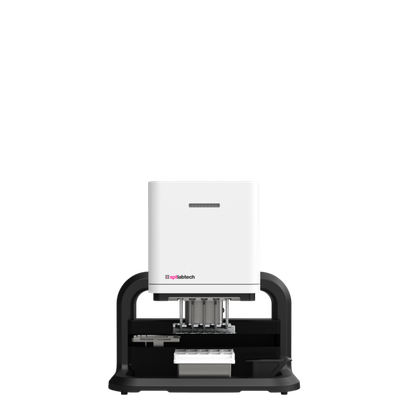
Low-volume positive displacement instruments such as mosquito LV and dragonfly discovery are purpose-built for miniaturized assay setup - delivering the accuracy, precision, and dead-volume performance that high-density formats demand.

Low volume liquid handling operations

Compound management and screening workflows involve four core low-volume operations, each with distinct precision requirements:

  • Cherry picking: Re-arraying individual compounds from library source plates or tubes into assay-ready formats

  • Plate reformatting: Converting between 96-, 384-, and 1,536-well plate formats

  • Serial and direct dilution: Preparing dose-response compound concentration series

  • Plate stamping: Creating replicate assay-ready plates from a single source

mosquito LV covers all four operations in a single instrument, with source dead volumes under 0.3 µL - ensuring maximum recovery from scarce compound stocks.

>4x
Reagent saving at 384-well vs 96-well format
>10x
Reagent saving at 1,536-well vs 96-well format
0.3 µL
Minimum dead volume per well (mosquito LV)
30 µL
Minimum dead volume for bulk dispensing (dragonfly)

Assay classes compatible with miniaturization

Most standard drug discovery assay formats can be miniaturized to 384- or 1,536-well formats without compromising assay quality metrics:

Workflow Automation

Which SPT Labtech Tool Supports Each Assay Setup Step?

Each stage of an automated assay setup workflow mapped to the specific SPT Labtech instrument best suited to that task.

Workflow Stage Task SPT Labtech Product Key Capability
Compound Cherry-Picking Re-arraying individual compounds from library source plates or tubes into assay-ready plates


Programmable single-well access; 25 nL–1.2 µL positive displacement; dead volumes from 0.5 µL per well
Plate Reformatting Converting compound plates between 96-, 384- and 1,536-well formats for downstream screening

Multichannel positive displacement at 25 nL–1.2 µL; compatible with DMSO and organic solvents; minimal dead volume
Dose-Response Dilution Setting up serial or direct compound dilution series for IC50 and dose-response experiments   Serial and direct dilution capability; viscosity-agnostic; acoustic source plate creation in same instrument
Reagent Bulk Dispensing Non-contact dispensing of assay buffers, detection reagents, and cell suspensions across multiple plates   Positive displacement, tip-free dispensing; 8 independent channels; nanoliter-to-milliliter range; no liquid classification required
Cell Plating Dispensing uniform cell numbers per well into 96-, 384- or 1,536-well assay plates with high viability


Adjustable dispense velocity for fragile cells; cell viability comparable to hand pipetting; dead volumes from 30 µL
General Liquid Handling Multi-step assay plate preparation, tip-based transfers, and wash steps at moderate throughput   5-position deck; active tip wash or reagent reservoir station; multi-step protocol automation
Volume Verification Confirming correct dispensed volumes in every well of 384-well assay plates post-dispense Ultrasound meniscus measurement; 384-well plate in 30 seconds; no consumables; compatible with 96-well tube racks
Recommended Products

Automation Solutions for Assay Setup

SPT Labtech's instrument portfolio covers every stage of the assay setup workflow, from low-volume compound reformatting and dose-response dilution to bulk reagent dispensing and volume verification.
Mosquito LV product card
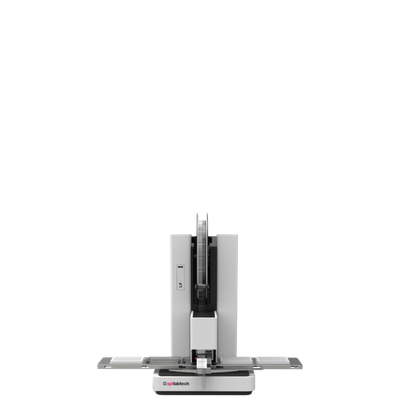
mosquito LV
Low volume cherry-picking, reformatting & dilution

mosquito LV simplifies assay miniaturization within automated, high-throughput settings. Positive displacement technology enables precise nanolitre transfers with minimal dead volumes - handling DMSO compound stocks, aqueous reagents, and viscous solutions without liquid classification. 

Typical applications
Cherry picking Plate reformatting Serial dilution Dose-response Assay miniaturization
Key Specifications
  • Volume range: 25 nL – 1.2 µL
  • Dead volume: <0.3 µL per well
  • Viscosity-agnostic positive displacement
  • Supports 96, 384 and 1,536-well formats
  • Serial dilution, reformatting, stamping, acoustic source plate creation
mosquito X1 product card v2
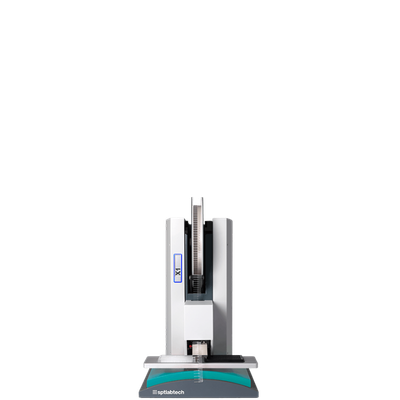
mosquito X1
Programmable cherry-picking & sample normalization

mosquito X1 offers precision low-volume sampling of any individual well in any plate or tube, making it ideal for HTS hit confirmation, secondary profiling, and compound normalization tasks requiring flexible, selective access to specific wells.

Typical applications
HTS hit confirmation Cherry picking Sample normalization Secondary profiling
Key Specifications
  • 25 nL – 5 µL
  • Programmable single-channel well access
  • Picks from plates or tubes in any format
  • Dead volumes from 0.5 µL per well
  • Compatible with DMSO and aqueous reagents
dragonfly discovery product card (4)
dragonfly discovery
Reagent bulk dispensing & cell plating

dragonfly discovery enables innovative, low-volume reagent dispensing across a broad range of assay applications. Highly repeatable positive displacement dispensing - without tips, washing, or liquid classification - minimizes reagent costs, saves time, and standardizes assays for superior data quality.

Typical applications
Reagent bulk fill Cell plating Buffer dispensing Assay development 3D cell culture
Key Specifications
  • Non-contact positive displacement dispensing
  • 8 independent channels
  • Dead volumes from 30 µL
  • Compatible with 96, 384 and 1,536-well plates
  • Viscosity range: 70% ethanol to 70% glycerol
apricot S3 (1)
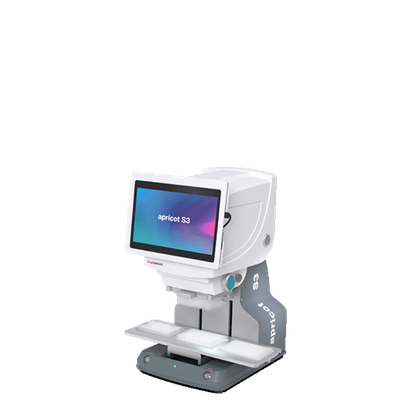
apricot S3
Automated high performance pipetting

The apricot S3 offers automated high performance 96 and 384 channel pipetting, equally suited to low or high-throughput use. The instrument’s interchangeable pipetting cores allow researchers to simply select the volume range depending on the application, without a need for any tools.

Typical applications
Serial dilution Plate replication Plate reformatting Assay optimization ELISA
Key Specifications
  • Volume range: 0.5 µL – 1 mL (interchangeable cores)
  • 96 and 384-channel pipetting cores, tool-free exchange
  • Precision: <5% CV at 1 µL (96/384-125 core)
  • Supports 24, 96 and 384-well plates, deep well blocks and racked tubes
  • Compact benchtop footprint that fits inside a hood
apricot PP5 Product Card
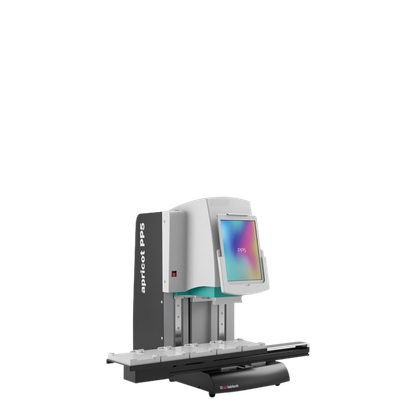
apricot PP5
General automated liquid handling

The apricot PP5 brings together the functionality of several pipettors into one space-saving instrument. Its accurate and repeatable automation minimizes repetitive tasks and eliminates pipetting errors - with an intuitive interface and 5-position automated deck suited to both production and laboratory environments.

Typical applications
General assay prep Multi-step protocols Tip-based transfers Plate washing
Key Specifications
  • 5-position automated deck
  • Optional active tip wash or reagent reservoir station
  • Supports multi-step liquid handling protocols
  • Compact footprint for laboratory or production use
VC384 Product Card
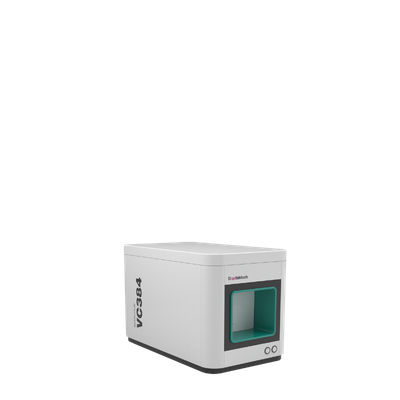
BioMicroLab VC384
Rapid volume verification for assay QC

The BioMicroLab VC384 is the preferred volume verification solution for most laboratories. Ultrasound technology measures the liquid meniscus height in each well with no consumables - returning volumes for a full 384-well plate in as little as 30 seconds in fast scan mode.

Typical applications
Post-dispense QC Volume verification Plate QC Liquid handler validation
Key Specifications
  • 384-well plate scan in as little as 30 seconds
  • No consumables or specialized adapters required
  • Compatible with 96-, 48-, 24-well tube racks (no adapters)
  • Fastest scan speed and highest accuracy in class
Frequently Asked Questions

Assay Setup: Common Questions

Assay setup is the process of preparing and configuring biological or biochemical assays for compound screening and drug candidate evaluation. It encompasses compound cherry-picking and plate reformatting, dose-response dilution series, reagent bulk dispensing, and cell plating - typically across 96-, 384-, and 1,536-well microplate formats. 

Assay miniaturization is the transition from higher-volume plate formats to denser, lower-volume formats (384- or 1,536-well). It reduces reagent costs by 4–10 fold, increases throughput from the same reagent budget, and enables more experiments from limited compound stocks. Low-volume positive displacement instruments such as mosquito LV and dragonfly discovery are required to deliver accurate volumes at these scales.

Low volume liquid handling involves transferring volumes of 2 µL or less. It relies on positive displacement technology - viscosity-agnostic and contact-mode, unlike air displacement systems that fail at sub-microliter volumes. Low-volume instruments handle cherry picking, plate reformatting, serial and direct dilutions, plate stamping, and acoustic source plate creation. 

Serial dilutions prepare each concentration step from the previous one - quicker but susceptible to cumulative error. Direct dilutions prepare each concentration point independently from a stock, eliminating error propagation but requiring intermediate concentrations. Choice depends on required accuracy and dose-response dynamic range. 

SPT Labtech offers: mosquito LV (25 nL–1.2 µL) for cherry picking, reformatting and dilutions; mosquito X1 for programmable single-well cherry picking; dragonfly discovery for tip-free bulk reagent dispensing across all plate formats; apricot S3 for automated high performance 96- and 384- channel pipetting; PP5 for general automated liquid handling; and BioMicroLab VC384 for rapid post-dispense volume verification. 

Reproducible cell plating requires uniform cell counts, high viability, and minimal dead volume. dragonfly discovery delivers uniform plating validated against hand pipetting, with adjustable dispense velocity for fragile cell lines, dead volumes from 30 µL, and 1,536-well plate compatibility.

The BioMicroLab VC384 uses ultrasound to measure the liquid meniscus height in each well, returning volumes for a full 384-well plate in as little as 30 seconds in fast scan mode - with no consumables and no plate-specific adapters.

Positive displacement dispensing uses a piston mechanism to push liquid directly, without an air gap between piston and liquid. This eliminates errors from viscosity, vapour pressure, and surface tension. dragonfly discovery's technology delivers accurate volumes across viscosities from 70% ethanol to 70% glycerol, without liquid classification or calibration between reagent changes.

References
  1. Macarron R, et al. Impact of high-throughput screening in biomedical research. Nat Rev Drug Discov. 2011;10(3):188–195. https://doi.org/10.1038/nrd3368
  2. Zhang JH, et al. A simple statistical parameter for use in evaluation and validation of high throughput screening assays. J Biomol Screen. 1999;4(2):67–73. https://doi.org/10.1177/108705719900400206
  3. Haney SA. High-content screening: Science, techniques and applications. Wiley. 2008. https://doi.org/10.1002/9780470229699
  4. Hertzberg RP, Pope AJ. High-throughput screening: new technology for the 21st century. Curr Opin Chem Biol. 2000;4(4):445–451. https://doi.org/10.1016/S1367-5931(00)00110-1
  5. Pereira DA, Williams JA. Origin and evolution of high throughput screening. Br J Pharmacol. 2007;152(1):53–61. https://doi.org/10.1038/sj.bjp.0707373
  6. Zanella F, Lorens JB, Link W. High content screening: seeing is believing. Trends Biotechnol. 2010;28(5):237–245. https://doi.org/10.1016/j.tibtech.2010.02.005

Ready to optimize your assay setup workflows?

Our application scientists can help you identify the right liquid handling strategy for your specific assay format, throughput requirement, and reagent challenge.