What does it actually mean to scale a genomics core?
For a long time, the industry answer was simple: add more hands, buy more pipettes, and brace your team for the grueling physical reality of manual high-throughput processing. But as sample queues swell, staff time rapidly becomes a lab's hard ceiling.
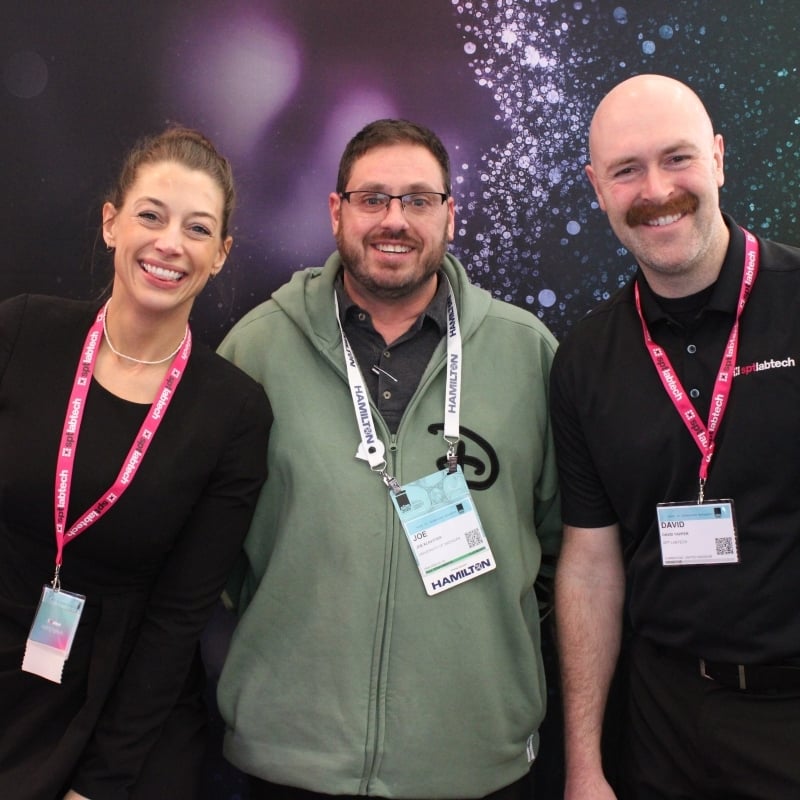
In a recent conversation, Joe Klavitter from the University of Michigan Advanced Genomics Core sat down to discuss his hit LinkedIn series, Automated State of Mind, and how shifting to a true "automation-first" philosophy helped his core shatter efficiency barriers - compressing a massive 384-sample SMART-Seq workflow from a 12-day manual slog into just 3 days on a single instrument.
Below are the key takeaways from the interview, exploring how SPT Labtech’s firefly® is breaking down adoption barriers and turning traditional scientists into liquid handling innovators.
1. What is an "Automated State of Mind"?
An automated state of mind isn't just about buying a robot; it’s a radical shift in how you ask questions.
In a service operation like the Advanced Genomics Core, consistency is the product. When staff spend most of their day manually moving liquid plate-after-plate, they aren't available for high-value tasks like QC review, protocol development, or troubleshooting. Shifting to automation frees technicians from repetitive labor and expands what a core facility can offer.
2. Unlearning Bad Habits: Designing for the Robot
One of the biggest mistakes labs make when scaling up is automating a manual workflow step-for-step without auditing it first.
"You end up automating your bad habits," Joe points out. For example, many manual protocols include "human recovery moments" - pauses designed just for a technician to check a reagent or swap a tip box. When transferred directly to a robot, these pauses become weird bottlenecks or failure points. Designing for automation forces a lab to look at the underlying chemistry and evaluate why every single step exists.
3. Inside the Milestone: 384 Samples, 1 Robot, 3 Days
Before integrating the firefly, a 384-sample SMART-Seq project meant splitting work across multiple days, technicians, and instruments. Fatigue inevitably became a variable, and the timeline dragged out to 10–12 days because technicians had to process 96-well plates one at a time.
.png?width=852&height=479&name=firefly-manual-workflow(1).png)
With firefly, a single operator executed all four plates sequentially across three days. The technical capabilities that made this efficiency jump possible include:
- Combined Pipetting and Dispensing: Keeping non-contact dispensing and air-displacement pipetting on a single deck eliminates plate hand-offs, minimizing the risk of errors.
- Active Reagent and Thermal Blocks: Active cooling ensures sensitive reagents don't degrade by warming up on a passive piece of labware.
- Deck Layout Flexibility: The deck allowed the team to design a seamless sequential run without needing to pause and reorganize.
The result? Tighter, cleaner, and more consistent QC metrics (such as library size distribution, concentration, and sequencing yield) across all plates compared to manual preps.
4. Demystifying Software: Empowering Scientists, Not Programmers
A major traditional barrier to liquid handling automation is software complexity. Labs worry they will need a dedicated automation programmer just to change a protocol.
The firefly flips this narrative. Its software is built specifically for people who understand the biology, not code. To test this accessibility, Joe’s coworker, Andrea Ruszala who had no prior experience writing automation protocols, was tasked with building a protocol entirely from scratch. She fully designed, tested, and successfully ran it with real samples in just two days.
Automation isn't just a technical hurdle; it’s a psychological one. For many bench scientists, manual pipetting is a deeply familiar language built on years of practiced intuition; there is a natural hesitation to step away from the bench when you are used to personally verifying every liquid transfer. firefly breaks down that barrier by making the software mirror the scientist's logic, transforming them from a manual operator into a process architect.
5. Moving from Vendor to Partner
Successfully transitioning away from manual workflows relies heavily on the relationship behind the instrument. Any lab manager knows that the ultimate test of an automation platform isn't dispensing water - it's managing magnetic beads. Automated bead cleanups are notorious for making or breaking a protocol due to liquid viscosity and magnet physics.
When the core encountered initial challenges optimizing Qiaseq beads, SPT Labtech’s Field Application Scientist (FAS), Laura Henry, and the application team collaborated directly with them to adjust calibrations and timing. Treating automation vendors as teammates rather than transactional suppliers paves the way for joint protocol development, early platform access, and shared innovation.
Joe's Actionable Advice for Lab Managers
Before writing a single line of a protocol, walk through the workflow as if you are the robot. Identify any step where a human would say "it depends" or "you sort of get a feel for it." Those are the flags you must “engineer out” or build a QC checkpoint around to ensure your automation holds up when real samples are on the line.
Keep the Conversation Going
Listen to the Clips: Check out our accompanying audio snippets from the live interview to hear Joe break down the operational ROI of automated scale.









.png?width=450&height=458&name=firefly%20V2%20-%20front%201%20(1).png)
