






 Individual responsibilities
Ivan builds strong working relationships with customers and advises them on how to best use SPT Labtech products to achieve their scientific goals. He is primarily responsible for our chameleon instrument. This instrument encompasses the latest technologies in cryo-EM grid preparation, which have the potential to tackle preferential orientation problems and air water interface denaturation issues when making cryo-EM grids. This instrument will make it easier for scientists to overcome the technical hurdles in cryo-EM to find answers to their scientific questions. He also gathers user feedback to help our Research and Development Team improve instrument design and reduce bottlenecks. Additionally, he test runs new instrument designs under development, as well as stays up to date on the latest research trends to help guide future product development.
Skills
Scientific knowledge is a given in his job role. However, there are also a number of core competencies that are critical to success. An absolute must-have is good communication skills. Active listening, observing, empathizing and talking with customers are all essential to providing an exceptional experience centred and trust and transparency.
Responsibilities
Ivan is part of a team of Field Applications Scientists (FAS).The department of FASs play a fundamental role in ensuring customers get the most out of their instrument outputs and workflows. We first and foremost provide scientific advice and assist laboratory teams in the installation of instruments and design of scientific applications.
The team are PhD-level scientists, specializing in certain areas ranging from genomics to structural biology. The breadth of a FAS team’s training and expertise is a fantastic benefit to our customers as their support gives them confidence to pursue innovative ideas.
We are involved in the very early interactions of the purchasing process, through to product demonstration, installation and ongoing usage and optimization of SPT Labtech instruments.
Best parts of the job
Ivan enjoys the variety the job role brings. He has all kinds of daily tasks ranging from technical to communicative. He is always searching for opportunities to expand his knowledge through meeting new scientists and loves to work collaboratively with customers.
Professional Achievements
Ivan was part of a team that determined a very large and complex protein structure called the MS-ring in bacterial flagella. He developed the protein expression and purification procedures and also optimized the cryo-EM grid preparation. The protein complex was quite fragile and could only be obtained in small quantities. It also had preferential orientation on cryo-EM grids, a common problem encountered in cryo-EM grid preparation. They found that crosslinking the protein complex helped to mitigate preferential orientation, in addition to improving sample stability. They additionally used cryo-EM grids coated with a graphene oxide layer to concentrate the sample on the grid to overcome the limited availability of protein samples. They eventually published this paper in Nature Microbiology.
Professional Ambitions
Ivan would like to continue to help scientists overcome roadblocks in their research work and drive efficiency in their labs so they can focus on making groundbreaking discoveries.
More about Me
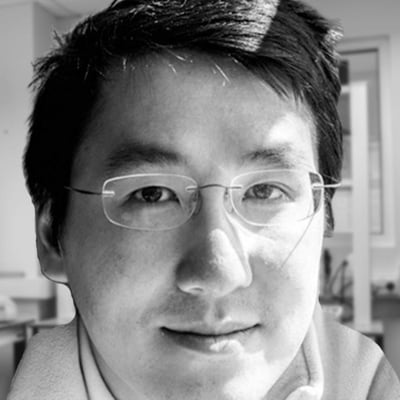
Ivan became fascinated by the idea of understanding life at the atomic scale as an undergraduate student. Moreover, research tools used in structural biology research tend to be much more exotic and expensive which, again, is one of the main reasons why it fascinates him. He went on to complete a PhD at the Chinese University of Hong Kong and then completed a post doctorate at the University of Oxford before taking his position as an Application Scientist at SPT Labtech.Outside of work, he enjoys street/portrait photography. Structural biology encompasses capturing pictures of protein molecules to understand how they function at a molecular scale. He sees photography as an extension of what he does professionally, as a scientist. He is still taking pictures now, but of places and people, not proteins!